Wednesday, 30 August 2017

Best editing software for product photography

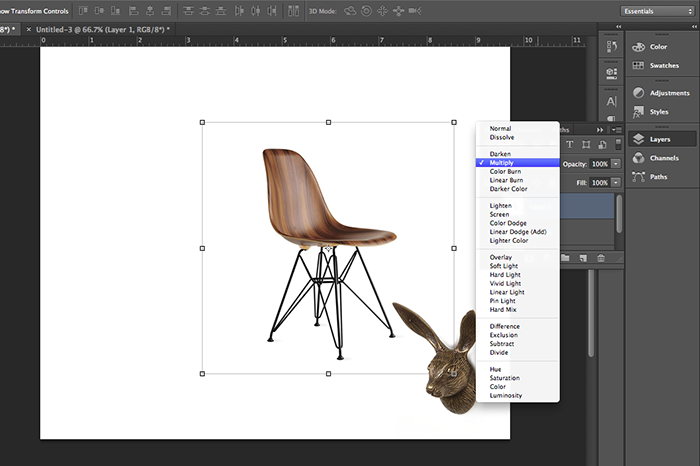
Essential in photography, particularly product photography, is the post-processing of raw images to maintain the high quality of photographs. Photo editing can be as subtle as touch-ups or as intense as the enhancement of colors or the addition of layers.

Image source: theblogmarket.co

Discussed below are some of the best software for editing of photos:

Adobe Photoshop

Considered “the mother of all photo editors” and “the one editor to rule them all,” Photoshop has a plethora of tools that allow users to get the most out of their images. There are also countless guides available in the Internet for those who are not yet adept in using the software.

GIMP

The GNU Image Manipulation Program (GIMP) is one of most popular free editing applications. It has helped users for more than two decades now. Because it is an open source program, it can be installed in any operating system, including Windows, Mac, and Linux. While it is still not on the level of Photoshop, it has the necessary features for product photography.

Fotor

Also a free photo editing software, Fotor can be accessed through an Internet browser, which means that it does not require installation and can be used on the go. It has the basic editing tools, however, its High Dynamic Range (HDR) feature allows editors apply the best lighting for their images.

Image source: fitsmallbusiness.com

Seasoned professional photographer Charles Nucci is the founder of Nucci Studios Photography, which specializes in advertising, product, and editorial photography. Click here for similar articles.

Monday, 31 July 2017

Recommended Cameras For Product Photography

Image source: bigcommerce.com
It’s important that any business merchandise comes with the best photos to make them more enticing and sellable. The ideal is to hire a professional product photographer, of course, but it doesn’t hurt to look up the needed gear and know what works best.

Budget is often the first thing to consider in this regard, and high-end DLDR cameras cost thousands of dollars. This is with good reason, as they come with interchangeable lenses (which are expensive necessities on their own). Everybody in the industry uses DLSRs as they offer the best quality, come with their own accessories, and offer customizing and future expandability.

You need not overspend for the camera, though. Cheaper point-and-shoot or the mixed variety are slowly becoming good, emergency options. The features are limited in point-and-shoot, just like Instamatic cameras of old, but the optics are okay. These will work if you need to use or post photos in a rush.

Image source: pinterest.com
Mixed DLSR and point-and-shoot cameras are better options. There’s no viewfinder in these; you look into a mirrorless display just like in a digital camera. And lenses are not available. But they are more portable and lightweight.

By the way, don’t be baited by cameras boasting of very high megapixels, as these don’t necessarily mean clearer pictures. At a given point, pixels just become noise because onboard sensors can’t handle them. There’s no need for such unless you’re printing photos for huge tarpaulins and the like.

Charles Nucci is a professional photographer from San Francisco specializing in high-end product photography. He is a member of both American Photographic Artists and the American Society of Media Photographers. For more on his work and services, visit the Nucci Studio Photography website.


Wednesday, 21 June 2017

Positive Results In Negative Space Product Photography

Negative space is a familiar element for many commercial photographers. Usually in the form of a stark white background, the purpose of negative space is to draw attention toward the subject of the photograph or to add a dramatic effect. Thus, negative space is an indispensable part of commercial photography, especially when products are involved.

Although negative space can come in many colors (either by utilizing a bare sky or utilizing the out-of-focus bokeh in the background), most of the negative space in product photography involves white or black backgrounds within a studio, all of which are meant to both highlight the product in full and make it easy for the design team to crop out.

Image source: bigcommerce.com

Some products can easily be photographed in a small white background, which can be economically set up by amateurs. Others, such as clothing that needs to be worn, may require a larger white background and a complex, room-sized setup.

Capturing a solid color background can be challenging for the novice photographer. Lighting must be of the correct intensity and diffusion, low enough to prevent needless reflections and bright enough to make the entire product visible. Especially for images meant to be cropped and edited, care should be taken to minimize shadows and reflections. The camera’s ISO must match with the Kelvin temperature of the lights used.

Image source: petapixel.com

Because white is the standard for negative space in advertisements, it could pose a challenge when photographing white-colored objects. Carefully lighting both the backdrop and the object can create sufficient contrast between the two spaces to showcase the product in its natural color while creating a distinction with its background.

Charles Nucci is a professional photographer with extensive experience in product photography. Visit his website for more on him and his work.